Session Notes
Record what you practiced, how it felt, and what you want to notice next time. A single line is enough on busy days.
A library of questions, checklists, and reading paths built for readers who train around a full working life in Jakarta and beyond.
Most readers do not need another subscription or another app. They need a short, honest page they can return to on a Tuesday evening when the week has not gone as planned. The materials collected here are intentionally plain: short checklists, a few printable templates, and a handful of structured questions that can be answered in the margin of a notebook. None of them promise a transformation on a fixed schedule; they are simply tools for noticing what is actually happening in a week of training, eating, and resting.
Each resource below was drafted by the Xyjecta editorial desk after conversations with readers who described the same frustration: plenty of advice, very little structure for applying it to an ordinary week that includes traffic, family obligations, and inconsistent sleep. The documents are deliberately short. A one-page checklist is more likely to survive on a kitchen counter than a twenty-page manual.
Record what you practiced, how it felt, and what you want to notice next time. A single line is enough on busy days.
Look across seven days for patterns in sleep, effort, mood, and available time before adjusting anything in the plan.
Take clear, specific questions to a qualified coach or health professional rather than searching for a single universal answer.
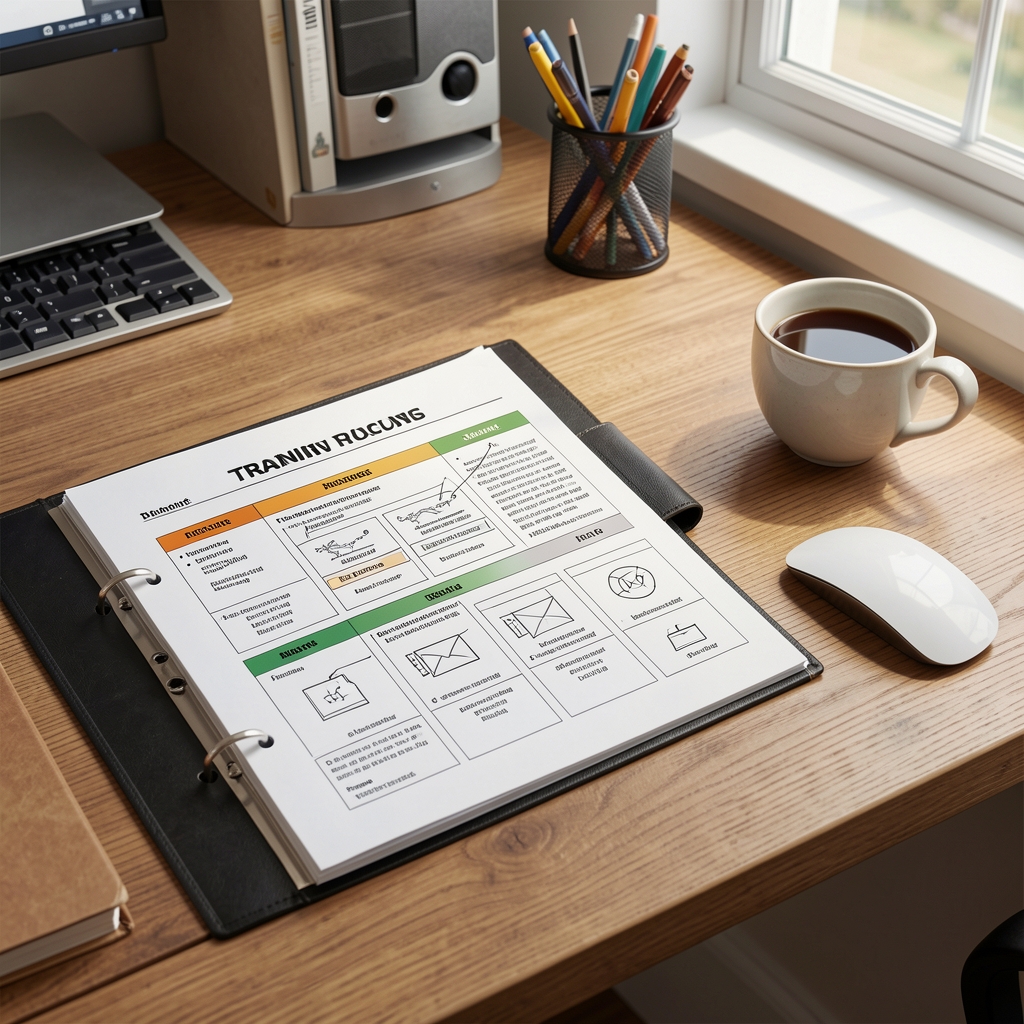
A resource only helps if it gets used more than once. Readers who keep a consistent record tend to favour formats that fit an existing habit rather than one requiring a new ritual. A paper checklist taped inside a gym bag works for some; a single recurring note on a phone works for others. The right choice has less to do with sophistication and more to do with friction — whichever version takes the least effort to open and fill in on a tired evening is usually the one that lasts.
We update the templates roughly once a quarter based on reader feedback, most recently in September 2026, when several readers asked for a shorter version of the weekly review that fits on a single index card.
The table below summarises the four formats readers request most often, along with a realistic sense of how long each takes to complete and where it tends to work best.
| Format | Best Use | Typical Time | Where It Works Well |
|---|---|---|---|
| Printable Checklist | Daily session notes | Under two minutes | Gym bag, home gym wall |
| Weekly Review Card | Sunday reflection | Five to eight minutes | Kitchen table, desk drawer |
| Question List | Appointments with a coach or clinician | Prepared in advance | Notes app, printed page |
| Audio Field Note | Recording thoughts right after a session | Under one minute | Car, locker room, walking home |
Choose a single template rather than trying several at once. Switching systems every week is a common reason records stop being kept.
Fill it in right after a session, during a commute, or while the kettle boils — attaching the record to something already happening increases the odds it continues.
Daily numbers are noisy. A weekly glance across seven entries tends to show a clearer pattern than any single day can.
A qualified coach or clinician usually finds a short summary more useful than a stack of unsorted daily notes.
No. They are intentionally generic so they can sit alongside strength work, walking routines, or mobility practice without modification.
Some readers do, others complete a single weekly card. Either approach can produce a useful record over several months.
Yes. The templates are meant to be edited freely; nothing about the wording is fixed or proprietary.
"The readers who keep the most useful records are rarely the most disciplined on paper. They are the ones who picked a format simple enough to survive a bad week."
If none of the formats above fit your routine, write to the editorial desk and describe what you are trying to track — we often adapt a template based on specific requests.
Ask About A Template